

- About BraveBrains
Bridging
Brain Science...

And Real Life
- About BraveBrains
Bridging
Brain Science

And Real Life
- Our Mission
We help you make sense of challenging behavior
without losing yourself in the process
BraveBrains makes the science behind behavior simple, human, and immediately useful for kids and the adults who support them.
- A Note From Our Founder
BraveBrains was born of necessity.

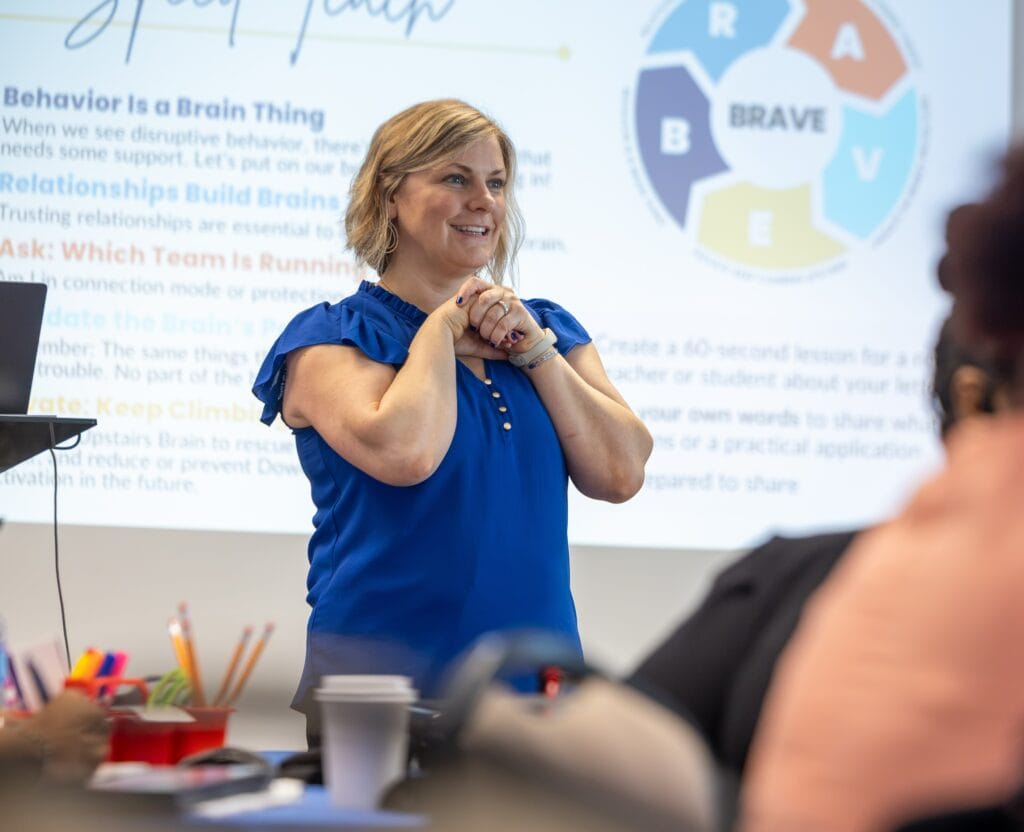
When I started working in foster care in 2005, I didn’t know what I didn’t know. I was fresh out of graduate school and wanted to do good work, but I didn’t feel prepared for the behavioral and relational challenges I was supposed to have answers for as a mental health counselor.
On top of struggles at home, my clients were getting kicked out of preschool, skipping school, or ending up in trouble with juvenile detention.
They also seemed to be pushing away the very adults who were trying to help: parents, counselors, teachers, you name it.
And the adults were losing hope.
That set me on a mission to understand what was really going on. I looked everywhere I knew to look for answers, but much of what I found still didn’t give me what I needed to make sense of what I was seeing.
It wasn’t until I began digging into attachment science, and especially how attachment, trauma, and the brain work together, that something started to click.
Behavior can be confusing at best and horribly painful at worst. For the person struggling. For the people trying desperately to help. For families, classrooms, and teams that care deeply and still find themselves stuck.
Brain science gave me another way to see it.
I began to see that brains were doing what brains are designed to do: protect us, connect us with others, and help us navigate the world based on what we’ve experienced and how we’re wired. That didn’t make every behavior okay, but it helped the behavior make sense.
And I saw the same thing with adults. Teachers, counselors, parents, and school leaders were doing hard work with tools that didn’t always fit the moment. It was easy for everyone to end up frustrated with themselves or with each other.
So I started translating what I was learning into stories, visuals, and practical tools built for real people. Over time, that became trainings, books, resources, and eventually BraveBrains.
Behavior is a brain thing. And brains can change.
That’s the hope I found all those years ago, and it’s still at the heart of everything we do at BraveBrains.
Glad we’re in this together,
Jessica
Jessica Sinarski, LPCMH
- A Note From Our Founder
BraveBrains was born of
necessity.
When I started working in foster care in 2005, I didn’t know what I didn’t know. I was fresh out of graduate school and wanted to do good work, but I didn’t feel prepared for the behavioral and relational challenges I was supposed to have answers for as a mental health counselor.
On top of struggles at home, my clients were getting kicked out of preschool, skipping school, or ending up in trouble with juvenile detention.
They also seemed to be pushing away the very adults who were trying to help: parents, counselors, teachers, you name it.
And the adults were losing hope.
That set me on a mission to understand what was really going on. I looked everywhere I knew to look for answers, but much of what I found still didn’t give me what I needed to make sense of what I was seeing.
It wasn’t until I began digging into attachment science, and especially how attachment, trauma, and the brain work together, that something started to click.
Behavior can be confusing at best and horribly painful at worst. For the person struggling. For the people trying desperately to help. For families, classrooms, and teams that care deeply and still find themselves stuck.
Brain science gave me another way to see it.
I began to see that brains were doing what brains are designed to do: protect us, connect us with others, and help us navigate the world based on what we’ve experienced and how we’re wired. That didn’t make every behavior okay, but it helped the behavior make sense.
And I saw the same thing with adults. Teachers, counselors, parents, and school leaders were doing hard work with tools that didn’t always fit the moment. It was easy for everyone to end up frustrated with themselves or with each other.
So I started translating what I was learning into stories, visuals, and practical tools built for real people. Over time, that became trainings, books, resources, and eventually BraveBrains.
Behavior is a brain thing. And brains can change.
That’s the hope I found all those years ago, and it’s still at the heart of everything we do at BraveBrains.
Glad we’re in this together,
Jessica
Jessica Sinarski, LPCMH
- Supporting the People Who Support Kids
Who We Serve

School & District Leaders
Regional Education Partners
Trainers & Instructional Coaches
SPED Teams
Counselors & Related Service Providers
Teachers
Foster Care / Adoption Professionals
Parents & Caregivers
- Our Core Values
How We Work
Every BraveBrains partnership, training, lesson, book, and resource is guided by these core values.
Science with Heart
We make complex brain science simple, relatable, and compassionate, bridging the gap between research and real life. Visuals, stories, and easy-to-use resources help learning stick, especially for the kids who need it most.
Brain-Boosting Connection
Relationships build brains—literally. This applies to children and teens and to the adults helping them grow. We believe collaboration, shared language, community, and kind accountability are what turn good intentions into lasting change.
Seeing the Unseen
We provide the roadmap, training, and tools to reach kids who don’t fit standard behavioral models. We fill critical gaps in existing structures, ensuring no child is overlooked by the systems meant to support them.
Integrity-Driven Support
We honor the expertise within each community we serve, building on what works and tailoring our approach to fit their needs. Every product and partnership reflects our commitment to real-world impact, transparency, and trust.
- BraveBrains Impact
- Let's Work Together!
Brains can change. We're here to help
You know your people and your community.
We bring the research, practical tools, and support to help you build on what’s working and make meaningful change.